Why Thinking Skills Matter More Than Ever in Higher Education
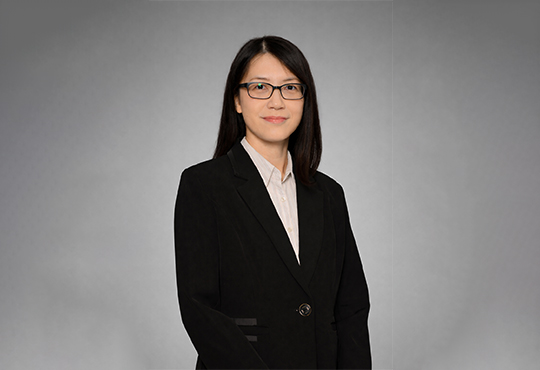 Catherine See, Senior Lecturer, Department of Science and Engineering, Centre for Foundation Studies (Sungai Long Campus), Universiti Tunku Abdul Rahman (UTAR) in an interaction with the higher education review shared her views on why are thinking skills becoming the most critical asset in modern higher education, how developing strong thinking skills can boost academic success and career opportunities, how improved thinking skills can lead to greater innovation and creativity in the classroom and more.
Ms Catherine See is a Senior Lecturer at the Centre for Foundation Studies (Sungai Long Campus), Universiti Tunku Abdul Rahman (UTAR). She holds a Bachelor of Education (Hons) in Mathematics and a Master of Science in Mathematics from Universiti Kebangsaan Malaysia (UKM), and has been actively engaged in tertiary education since 2011. A certified Mind Mapping Practitioner and three-time competition winner, Ms Catherine is a passionate advocate for STEAM and mental literacy.
Why are thinking skills becoming the most critical asset in modern higher education?
Nowadays, information is abundant and easily accessible. Students can obtain information instantly through digital devices as long as they are connected to the internet. In this era of information surplus, thinking skills enable students to filter information, evaluate the credibility of sources, and transform large amounts of data into meaningful knowledge. Without strong thinking skills, students may feel overwhelmed by the large volume of available information. As a result, modern higher education focuses on how to think rather than what to think.
From my experience as an educator, students with well-developed thinking skills are able to understand context and apply knowledge meaningfully, rather than just memorising facts. According to The Future of Jobs Report 2025 by the World Economic Forum, employers prioritize thinking skills, with analytical thinking and creative thinking remaining among the most sought-after core competencies. In fact, seven out of ten companies consider these skills essential in 2025. Therefore, thinking skills are becoming the most critical asset in modern higher education.
How can developing strong thinking skills boost academic success and career opportunities?
On 20 January 2026, Malaysia launched the National Education Blueprint 2026–2035, a reform initiative designed to improve educational outcomes and align student skills with the modern workforce. Simultaneously, the Malaysia Higher Education Plan (RPTM) 2026–2035 was also launched, emphasize the development of Higher Order Thinking Skills (HOTS). An outcome-based approach is central to RPTM, focusing on graduate quality, employability, and competitiveness.
Strong thinking skills, particularly HOTS, boost academic success by enabling students to move beyond basic memorization toward deep analysis. Observations show that students who can perform HOTS than just memorizing facts tend to do much better across all formats, not just in examinations, but in projects and presentations as well. In the long run, these are the exact skills employers are looking for.
What impact do thinking skills have on students’ ability to tackle complex real-world problems?
Real-world problems are rarely well-defined, and they certainly don’t have a ‘correct’ answer at the back of a textbook. To solve them, students must connect knowledge from multiple disciplines to create something new. Strong thinking skills allow them to break down a complex issue, weigh the constraints, and execute a logical solution.
I have seen this firsthand through my involvement in STEAM events like the KLESF International Challenge. Students with developed thinking skills are much more confident when presenting their innovations; they don’t just memorize a script, they actually understand the root cause of the issue they are solving. That shift in mindset from ‘why is this happening?’ to ‘how can my innovation fix it?’ is exactly what’s needed to tackle the complexities of the real-world problems.
Why is higher education focusing more on thinking skills than ever before?
The shift toward higher-order thinking is largely driven by Fourth Industrial Revolution (IR 4.0) and the rapid rise of Artificial Intelligence (AI). In an era where AI can process data and execute routine tasks far faster than human, traditional rote learning is no longer enough. To remain relevant, graduates must focus on what machines cannot do: think outside the box, solve unstructured problems, and apply ethical judgment. Higher education is moving away from teaching ‘what to think’ and toward ‘how to think’, ensuring that students can work alongside technology, rather than being replaced by it.
How can improved thinking skills lead to greater innovation and creativity in the classroom?
Improved thinking skills shift the classroom focus from the ‘reproduction of content’ to the creation of new knowledge. This allows students to transform from passive receivers of information into active innovators.
A great example of this in practice is the KLESF Creative Science Drama Competition. It’s a true STEAM initiative where students must integrate scientific content with a maximum 10-minute drama. What makes this a massive test of thinking skills is the ‘one-take’ rule - the video entry cannot have any edits, and shortlisted teams eventually perform live. By the time they step onto that live stage at KLESF, they are not just reciting facts anymore, they are demonstrating the exact kind of adaptability and creativity that the modern world demands.
What role do thinking skills play in preparing students for a rapidly changing job market?
The role of thinking skills has shifted from being a ‘bonus’ to a fundamental necessity. According to the World Economic Forum’s The Future of Jobs Report 2025, 69% and 57% of employers consider analytical thinking and creative thinking, respectively, to be core skills for their workforce. This makes it clear that higher-order thinking is no longer an optional add-on, it is compulsory competency for graduates entering a rapidly changing job market.
As technologies evolve, specific hard skills can become obsolete. In contrast, HOTS enable students to adapt, innovate, and oversee the systems that automate routine tasks. Moreover, today’s graduates are likely to change careers multiple times throughout their lives. Thinking skills equip them with the ability to learn continuously and transfer knowledge across different disciplines. This adaptability allows them to remain relevant despite constant shifts in industry demands.
Can enhancing thinking skills help students navigate the challenges of an increasingly digital education landscape?
Yes, enhancing thinking skills can help students navigate the challenges of an increasingly digital education landscape. The digital world is saturated with misinformation, fake news, and AI-generated content. Therefore, students must be able to manage information overload, evaluate the credibility of sources, and recognise bias or hallucinations in AI-generated content. This emphasis aligns with the Malaysia Higher Education Plan (RPTM) 2026–2035, which highlights the ethical use of AI as a key strategy in developing future-ready talent.
Enhanced thinking skills enable students to evolve from ordinary users of technology into masters of it. These skills allow students to choose how and when to use technology effectively and responsibly for learning. Without such skills, students may struggle to remain focused and become easily distracted by digital platforms.
In addition, enhanced thinking skills foster independent learning. They instil a love for inquiry, which is crucial for students to continuously acquire, evaluate, and create new knowledge as digital tools and learning environments evolve. In this way, thinking skills serve as the foundation for lifelong learning and ethical AI literacy in the digital age.
Current Issue