Dr. A V Arunkumar: Steering Business Education towards Future Readiness
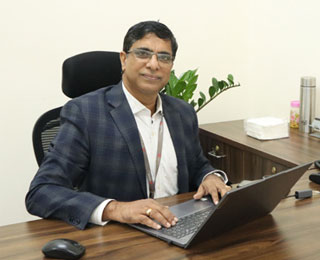
Dr A. V. Arunkumar, Professor & Dean, M S Ramaiah Institute of Management
In higher education, the role of a Dean extends far beyond academic oversight. Their leadership often determines how effectively an institution adapts to global trends, technological advancements, and evolving student needs. At the same time, Deans carry the responsibility of upholding academic integrity, promoting interdisciplinary learning, and ensuring that education remains not just a pursuit of knowledge, but also a driver of social transformation.
Dr A. V. Arunkumar, Professor and Dean at the M S Ramaiah Institute of Management, Bengaluru, exemplifies this multifaceted role. With over three decades of experience, his journey blends academia, research, and executive leadership in the financial sector. Before joining Ramaiah Institute, he was the founding faculty, Professor, and Associate Dean at the School of Economics and Finance (later School of Business) of a leading University in Bengaluru.
Dr Arunkumar’s expertise spans teaching, research, academic administration, development, international banking, financial risk management, and policy studies. He has made significant contributions to the field of Economics through his working papers, journal articles, book chapters, and books. After completing his PhD in Economics from ISEC, Bengaluru, with an RBI doctoral fellowship, he served as the Deputy Director at the Centre for Budget and Policy Studies (CBPS), an independent research organization. Alongside academia, he has held senior executive roles in development, commercial, and multinational banks, specializing in credit, operational risk, and enterprise risk management, holding the position of General Manager, Chief Risk Officer, etc.
A passionate teacher at heart, Dr Arun Kumar has continued to engage in training and research even while managing demanding industry roles. His research interests include sustainability, circular economy, governance of banks, MSMEs, and public policy. Unwavering in his belief that quality education transforms human potential, he remains committed to empowering students to meet future challenges with knowledge, resilience, and responsibility.
"Enriched by a global community of 6,000 alumni spanning three decades, our classrooms become spaces where industry wisdom and academic learning converge"
Blending Tradition & Innovation in Business Education
Modern business education is influenced by several factors, with industry relevance being a key driver. At M S Ramaiah Institute of Management, the curriculum is designed using a balanced mix of traditional and contemporary approaches to ensure graduates remain industry-ready. On the traditional side, advisory and academic committees comprising distinguished academicians from prestigious institutions, industry experts, alumni, and board members regularly review and update the curriculum.
Recent alumni with two to three years of work experience are also involved, providing fresh insights into current industry practices. From a modern perspective, the institute's commitment to industry relevance is further demonstrated through the "3C" approach - Collaborate, Co-create, and Co-deliver. This model not only encourages partnerships with industry to design curriculum but also ensures active involvement in delivery through live projects. This approach adds significant value to student profiles, making our graduates highly sought after by employers.
As part of the Gokula Education Foundation, established in 1962 by the visionary founder Late M.S. Ramaiah, the institution continues to uphold our mission of delivering education as a transformative force. Its student-driven programs, focusing on communication, coordination, ethics, entrepreneurship, and social responsibility, are not just about learning but about shaping the future. They ensure complete alignment with the foundation’s enduring values, inspiring hope and a sense of purpose in our students and the community.
“As Dean, I take the lead in driving initiatives that strengthen our industry connections across all areas of learning, though every faculty member also plays an active role in this effort. We maintain a comprehensive database of industry professionals and engage with them consistently through seminars, conferences, and collaborative events.
Industry leaders regularly contribute to discussions on critical themes such as sustainability, finance, and digital transformation through analytics. Their contributions not only enrich our curriculum but also enhance the relevance and reach of our institution, making the learning process exciting and dynamic for our students”, shares Dr Arunkumar.
Building Careers through Industry, Alumni, and Global Engagement
With a strong network of over 6,000 alumni built over three decades, industry insights flow back into the classroom through distinguished lecture series, panel discussions, and mentoring. Alumni also play a vital role in placements, often providing job opportunities and internships to current students.
On the global front, we hold MOUs with QS Top 1000 universities, offering immersion programs, internships, semester exchanges, and one-year study tracks. Complementary language training further equips students for international opportunities.
At our institution, we foster a culture of leadership and entrepreneurship. We run dedicated centers focused on leadership training and entrepreneurship development, providing our students with the skills and mindset to succeed in the corporate world. Student well-being is also a priority, with structured mentoring, access to professional counseling, and personal growth labs that emphasize etiquette, interpersonal skills, and self-management.
Together, these initiatives nurture well-rounded individuals who are not just confident and resilient but also ambitious and ready to take on corporate challenges. This reflects the institution's ethos of sustainable development and society-oriented growth strategy.
Anticipating Change, Shaping Future Leaders
The institution acknowledges that business education today comes with unique challenges. However, it is committed to addressing these challenges by strengthening industry-academia partnerships, providing more live project opportunities, adapting to the structural shifts brought by the National Education Policy (NEP), and addressing the growing demand for certification-based and flexible learning models. To address these, the Institute proactively updates its curriculum, builds stronger collaboration platforms, and implements flexible credit systems tailored to student needs.
Regular feedback sessions, conducted weekly or biweekly with student councils and through direct interactions, enable continuous fine-tuning of academic programs. For aspirants evaluating between PGDM and MBA, the school highlights that its NBA-accredited, AIU-MBA-equivalent PGDM curriculum combines the credibility of an MBA with the strength of a long-established, highly reputed program. Looking ahead, the institution’s priority is to remain ahead of market expectations.
This includes deeper integration of artificial intelligence, machine learning, and sustainability lessons across the curriculum, greater emphasis on project-and certification-based learning, and expanded specialization options within PGDM. What excites the leadership most is the opportunity to anticipate change and design programs that consistently produce well-prepared, confident, and future-ready business leaders, inspiring hope for the future of business education.
Dr A. V. Arunkumar, Professor and Dean at the M S Ramaiah Institute of Management, Bengaluru, exemplifies this multifaceted role. With over three decades of experience, his journey blends academia, research, and executive leadership in the financial sector. Before joining Ramaiah Institute, he was the founding faculty, Professor, and Associate Dean at the School of Economics and Finance (later School of Business) of a leading University in Bengaluru.
Dr Arunkumar’s expertise spans teaching, research, academic administration, development, international banking, financial risk management, and policy studies. He has made significant contributions to the field of Economics through his working papers, journal articles, book chapters, and books. After completing his PhD in Economics from ISEC, Bengaluru, with an RBI doctoral fellowship, he served as the Deputy Director at the Centre for Budget and Policy Studies (CBPS), an independent research organization. Alongside academia, he has held senior executive roles in development, commercial, and multinational banks, specializing in credit, operational risk, and enterprise risk management, holding the position of General Manager, Chief Risk Officer, etc.
A passionate teacher at heart, Dr Arun Kumar has continued to engage in training and research even while managing demanding industry roles. His research interests include sustainability, circular economy, governance of banks, MSMEs, and public policy. Unwavering in his belief that quality education transforms human potential, he remains committed to empowering students to meet future challenges with knowledge, resilience, and responsibility.
"Enriched by a global community of 6,000 alumni spanning three decades, our classrooms become spaces where industry wisdom and academic learning converge"
Blending Tradition & Innovation in Business Education
Modern business education is influenced by several factors, with industry relevance being a key driver. At M S Ramaiah Institute of Management, the curriculum is designed using a balanced mix of traditional and contemporary approaches to ensure graduates remain industry-ready. On the traditional side, advisory and academic committees comprising distinguished academicians from prestigious institutions, industry experts, alumni, and board members regularly review and update the curriculum.
Recent alumni with two to three years of work experience are also involved, providing fresh insights into current industry practices. From a modern perspective, the institute's commitment to industry relevance is further demonstrated through the "3C" approach - Collaborate, Co-create, and Co-deliver. This model not only encourages partnerships with industry to design curriculum but also ensures active involvement in delivery through live projects. This approach adds significant value to student profiles, making our graduates highly sought after by employers.
As part of the Gokula Education Foundation, established in 1962 by the visionary founder Late M.S. Ramaiah, the institution continues to uphold our mission of delivering education as a transformative force. Its student-driven programs, focusing on communication, coordination, ethics, entrepreneurship, and social responsibility, are not just about learning but about shaping the future. They ensure complete alignment with the foundation’s enduring values, inspiring hope and a sense of purpose in our students and the community.
“As Dean, I take the lead in driving initiatives that strengthen our industry connections across all areas of learning, though every faculty member also plays an active role in this effort. We maintain a comprehensive database of industry professionals and engage with them consistently through seminars, conferences, and collaborative events.
Industry leaders regularly contribute to discussions on critical themes such as sustainability, finance, and digital transformation through analytics. Their contributions not only enrich our curriculum but also enhance the relevance and reach of our institution, making the learning process exciting and dynamic for our students”, shares Dr Arunkumar.
Building Careers through Industry, Alumni, and Global Engagement
With a strong network of over 6,000 alumni built over three decades, industry insights flow back into the classroom through distinguished lecture series, panel discussions, and mentoring. Alumni also play a vital role in placements, often providing job opportunities and internships to current students.
On the global front, we hold MOUs with QS Top 1000 universities, offering immersion programs, internships, semester exchanges, and one-year study tracks. Complementary language training further equips students for international opportunities.
At our institution, we foster a culture of leadership and entrepreneurship. We run dedicated centers focused on leadership training and entrepreneurship development, providing our students with the skills and mindset to succeed in the corporate world. Student well-being is also a priority, with structured mentoring, access to professional counseling, and personal growth labs that emphasize etiquette, interpersonal skills, and self-management.
Together, these initiatives nurture well-rounded individuals who are not just confident and resilient but also ambitious and ready to take on corporate challenges. This reflects the institution's ethos of sustainable development and society-oriented growth strategy.
Anticipating Change, Shaping Future Leaders
The institution acknowledges that business education today comes with unique challenges. However, it is committed to addressing these challenges by strengthening industry-academia partnerships, providing more live project opportunities, adapting to the structural shifts brought by the National Education Policy (NEP), and addressing the growing demand for certification-based and flexible learning models. To address these, the Institute proactively updates its curriculum, builds stronger collaboration platforms, and implements flexible credit systems tailored to student needs.
Regular feedback sessions, conducted weekly or biweekly with student councils and through direct interactions, enable continuous fine-tuning of academic programs. For aspirants evaluating between PGDM and MBA, the school highlights that its NBA-accredited, AIU-MBA-equivalent PGDM curriculum combines the credibility of an MBA with the strength of a long-established, highly reputed program. Looking ahead, the institution’s priority is to remain ahead of market expectations.
This includes deeper integration of artificial intelligence, machine learning, and sustainability lessons across the curriculum, greater emphasis on project-and certification-based learning, and expanded specialization options within PGDM. What excites the leadership most is the opportunity to anticipate change and design programs that consistently produce well-prepared, confident, and future-ready business leaders, inspiring hope for the future of business education.
Current Issue