
Pratibha Institute of Business Management: Advancing MCA Education for a Technology-Driven Future
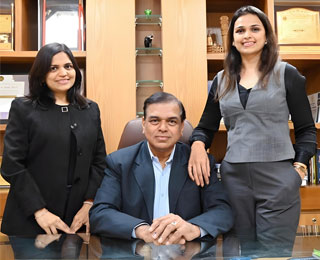
Dr. Deepak Shah, Founder and Secretary, Dr. Bhupali Shah & Dr. Tejal Shah, Trustee, Pratibha Group of Institutes
Meeting the demands of a technology-driven world requires the MCA colleges to offer a strong industry-integrated curriculum, advanced IT infrastructure, and career-focused technological training. As organizations prioritize professionals who can adapt to emerging tools and solve problems in real-time, an academic environment that blends theory with practical exposure becomes essential.
Such an approach not only builds confident, job-ready graduates but also strengthens long-term career growth in the IT sector. This progressive vision is well reflected at Pratibha Institute of Business Management.
For over a decade, Pratibha Institute of Business Management has steadily emerged as one of Pune’s most forward-thinking centres for professional education, particularly in the domain of computer applications. At a time when the global computer application ecosystem is undergoing rapid transformation, with artificial intelligence, cloud computing, data analytics, and automation redefining both job roles and expectations, this institute has embraced an academic philosophy grounded in relevance, adaptability, and industry integration.
The leadership of its MCA department reflects this shift. Headed by Manish Patankar, who spent more than twenty-six years in the IT services sector, including two decades at Tech Mahindra, the program is built upon a deep understanding of industry expectations. His knowledge has profoundly shaped the structure, pedagogy, culture, and long-term vision of the MCA programme, ensuring that graduates enter the workforce with a mindset aligned to real-world demands.
Building Strong Technical Foundations Through Hands-On Pedagogy
Industry leaders consistently emphasise three core qualities expected from entry-level technology professionals: problem-solving ability, adaptability, and teamwork. Pratibha Institute of Business Management’s MCA department translates these expectations into a teaching model that prioritizes practical exposure over theoretical familiarity.
Speaking more on this, Manish Patankar – Head of Department MCA, says, “At our institute, every technology lecture becomes a hands-on session, conducted through a ‘show-and-tell’ approach where faculty members actively demonstrate tools, coding practices, and troubleshooting processes.
Instead of limiting our students to conventional classroom learning, the early semesters immerse them in real problem scenarios, guide them through online research, develop resource-seeking habits, and familiarise them with the process of identifying and validating solutions.”
This experiential approach becomes even more powerful when coupled with the department’s emphasis on external certification. Students are required to complete at least three NPTEL courses during their academic journey. With NPTEL’s wide spectrum of industry-aligned modules, ranging from eight to fifteen weeks, students gain exposure to concepts, tools, and technologies beyond the university curriculum.
The learning ecosystem at Pratibha Institute of Business Management is further enriched by industry-driven workshops on tools such as Tableau, Power BI, R Programming, and advanced Excel, particularly for learners opting for Data Science electives.
A standout feature of the program is the direct involvement of alumni. Graduates working in top IT and product companies regularly return to conduct hands-on workshops on technologies like Selenium, PHP frameworks, and WordPress. Their proximity in age, combined with fresh industry experience, bridges the confidence gap for learners, helping them better relate to workplace expectations. This model strengthens both student learning and alumni development, creating a cycle of continuous mentorship and collaboration.
”Pratibha Institute of Business Management empowers future technologists with innovation-driven learning, industry-aligned skills, and the confidence to excel in a dynamic digital world”
Integrating Real-World Projects & Remote Mentoring
The post-COVID shift in education opened new opportunities for digital learning, and Pratibha Institute of Business Management quickly adapted. Remote mentoring through Zoom and Microsoft Teams allowed the institute to involve experienced professionals from various locations as project guides, offering students invaluable exposure to industry thought processes.
The department’s emphasis on mini-projects in every semester enables learners to consistently apply theoretical knowledge to practical challenges. The major internship project in the fourth semester, often conducted under the guidance of external experts, further deepens this industry-integrated learning approach.
Adapting to modern technology demands far more than textbook knowledge or routine coding practice. With generative AI tools like GitHub Copilot, Gemini, and automated coding assistants are transforming how problems are approached, students must learn to navigate a new era of intelligent development.
Pratibha Institute of Business Management ensures that learners gain responsible, well-guided exposure to these tools, helping them harness their advantages while maintaining strong conceptual foundations and ethical understanding, preparing them to excel in future-ready IT environments.
An equally crucial part of the department’s culture is the expectation that faculty members should not limit themselves to a static set of modules. They are encouraged to rotate subjects every year, ensuring that the teaching team remains versatile and updated with curriculum changes.
Over time, this has resulted in a highly skilled faculty capable of teaching nearly all MCA modules with equal expertise. The department’s focus on collective ownership of curriculum delivery fosters a collaborative learning culture where both faculty and students grow together.
Creating Strong Placement Pathways
Pratibha Institute of Business Management’s geographical location within the MIDC area of Pimpri-Chinchwad gives it a natural advantage, surrounded by manufacturing units, IT services organisations, and product companies. The institute’s placement cell maintains close relationships with HR leaders across tier-one, tier-two, and tier-three companies.
Alumni placed in various organisations act as touchpoints for ongoing feedback, enabling the college to refine its training strategy based on emerging expectations. Over the years, several companies have consistently recruited MCA graduates from PIBM due to the strong performance of alumni, transforming placements into an annual tradition.
Career development support includes continuous communication skills training, group discussions, mock interviews, resume enhancement sessions, and CET preparation workshops for aspiring MCA students from Pratibha Institute of Business Management’s undergraduate colleges as well as external institutions. The institute’s vision extends beyond placement season, focusing on empowering learners with long-term career resilience.
In 2024, the MCA curriculum underwent a significant transformation with the introduction of four specialized verticals - Full Stack, Data Science, Cloud Computing, and Cybersecurity. Pratibha Institute of Business Management responded by creating four internal verticals, each led by senior faculty members tasked with building an ecosystem of workshops, case studies, assignments, mentorship, and industry engagement.
This structure ensures focused and in-depth learning across core technological domains. Faculty leaders collaborate with industry professionals to evaluate assignments, ensuring that students solve real-world problems rather than textbook exercises.
Hackathons and coding competitions form another critical pillar of the program. The department actively encourages students to participate in smart city challenges, engineering college hackathons, and industry-sponsored events across Pune. These platforms train learners to collaborate, innovate, and work under pressure, qualities essential for modern software careers.
One of the most promising new initiatives is the 8 AM Club, designed to enhance coding proficiency on platforms such as TechGig and LeetCode. By solving one problem every day in small groups, students sharpen their logical reasoning and algorithmic thinking. This systematic, six-month plan is expected to significantly improve placement preparedness and overall coding fluency.
In conclusion, Pratibha Institute of Business Management’s MCA program stands out for blending rigorous academic training with immersive industry engagement. With hands-on pedagogy, specialised certifications, strong alumni involvement, coding excellence initiatives, and focused verticals, the institute ensures that students develop deep technical competence and practical confidence. This holistic approach empowers learners with the skills, exposure, and mindset required to excel in diverse technology-driven roles across the industry.
Such an approach not only builds confident, job-ready graduates but also strengthens long-term career growth in the IT sector. This progressive vision is well reflected at Pratibha Institute of Business Management.
For over a decade, Pratibha Institute of Business Management has steadily emerged as one of Pune’s most forward-thinking centres for professional education, particularly in the domain of computer applications. At a time when the global computer application ecosystem is undergoing rapid transformation, with artificial intelligence, cloud computing, data analytics, and automation redefining both job roles and expectations, this institute has embraced an academic philosophy grounded in relevance, adaptability, and industry integration.
The leadership of its MCA department reflects this shift. Headed by Manish Patankar, who spent more than twenty-six years in the IT services sector, including two decades at Tech Mahindra, the program is built upon a deep understanding of industry expectations. His knowledge has profoundly shaped the structure, pedagogy, culture, and long-term vision of the MCA programme, ensuring that graduates enter the workforce with a mindset aligned to real-world demands.
Building Strong Technical Foundations Through Hands-On Pedagogy
Industry leaders consistently emphasise three core qualities expected from entry-level technology professionals: problem-solving ability, adaptability, and teamwork. Pratibha Institute of Business Management’s MCA department translates these expectations into a teaching model that prioritizes practical exposure over theoretical familiarity.
Speaking more on this, Manish Patankar – Head of Department MCA, says, “At our institute, every technology lecture becomes a hands-on session, conducted through a ‘show-and-tell’ approach where faculty members actively demonstrate tools, coding practices, and troubleshooting processes.
Instead of limiting our students to conventional classroom learning, the early semesters immerse them in real problem scenarios, guide them through online research, develop resource-seeking habits, and familiarise them with the process of identifying and validating solutions.”
This experiential approach becomes even more powerful when coupled with the department’s emphasis on external certification. Students are required to complete at least three NPTEL courses during their academic journey. With NPTEL’s wide spectrum of industry-aligned modules, ranging from eight to fifteen weeks, students gain exposure to concepts, tools, and technologies beyond the university curriculum.
The learning ecosystem at Pratibha Institute of Business Management is further enriched by industry-driven workshops on tools such as Tableau, Power BI, R Programming, and advanced Excel, particularly for learners opting for Data Science electives.
A standout feature of the program is the direct involvement of alumni. Graduates working in top IT and product companies regularly return to conduct hands-on workshops on technologies like Selenium, PHP frameworks, and WordPress. Their proximity in age, combined with fresh industry experience, bridges the confidence gap for learners, helping them better relate to workplace expectations. This model strengthens both student learning and alumni development, creating a cycle of continuous mentorship and collaboration.
”Pratibha Institute of Business Management empowers future technologists with innovation-driven learning, industry-aligned skills, and the confidence to excel in a dynamic digital world”
Integrating Real-World Projects & Remote Mentoring
The post-COVID shift in education opened new opportunities for digital learning, and Pratibha Institute of Business Management quickly adapted. Remote mentoring through Zoom and Microsoft Teams allowed the institute to involve experienced professionals from various locations as project guides, offering students invaluable exposure to industry thought processes.
The department’s emphasis on mini-projects in every semester enables learners to consistently apply theoretical knowledge to practical challenges. The major internship project in the fourth semester, often conducted under the guidance of external experts, further deepens this industry-integrated learning approach.
Adapting to modern technology demands far more than textbook knowledge or routine coding practice. With generative AI tools like GitHub Copilot, Gemini, and automated coding assistants are transforming how problems are approached, students must learn to navigate a new era of intelligent development.
Pratibha Institute of Business Management ensures that learners gain responsible, well-guided exposure to these tools, helping them harness their advantages while maintaining strong conceptual foundations and ethical understanding, preparing them to excel in future-ready IT environments.
An equally crucial part of the department’s culture is the expectation that faculty members should not limit themselves to a static set of modules. They are encouraged to rotate subjects every year, ensuring that the teaching team remains versatile and updated with curriculum changes.
Over time, this has resulted in a highly skilled faculty capable of teaching nearly all MCA modules with equal expertise. The department’s focus on collective ownership of curriculum delivery fosters a collaborative learning culture where both faculty and students grow together.
Creating Strong Placement Pathways
Pratibha Institute of Business Management’s geographical location within the MIDC area of Pimpri-Chinchwad gives it a natural advantage, surrounded by manufacturing units, IT services organisations, and product companies. The institute’s placement cell maintains close relationships with HR leaders across tier-one, tier-two, and tier-three companies.
Alumni placed in various organisations act as touchpoints for ongoing feedback, enabling the college to refine its training strategy based on emerging expectations. Over the years, several companies have consistently recruited MCA graduates from PIBM due to the strong performance of alumni, transforming placements into an annual tradition.
Career development support includes continuous communication skills training, group discussions, mock interviews, resume enhancement sessions, and CET preparation workshops for aspiring MCA students from Pratibha Institute of Business Management’s undergraduate colleges as well as external institutions. The institute’s vision extends beyond placement season, focusing on empowering learners with long-term career resilience.
In 2024, the MCA curriculum underwent a significant transformation with the introduction of four specialized verticals - Full Stack, Data Science, Cloud Computing, and Cybersecurity. Pratibha Institute of Business Management responded by creating four internal verticals, each led by senior faculty members tasked with building an ecosystem of workshops, case studies, assignments, mentorship, and industry engagement.
This structure ensures focused and in-depth learning across core technological domains. Faculty leaders collaborate with industry professionals to evaluate assignments, ensuring that students solve real-world problems rather than textbook exercises.
Hackathons and coding competitions form another critical pillar of the program. The department actively encourages students to participate in smart city challenges, engineering college hackathons, and industry-sponsored events across Pune. These platforms train learners to collaborate, innovate, and work under pressure, qualities essential for modern software careers.
One of the most promising new initiatives is the 8 AM Club, designed to enhance coding proficiency on platforms such as TechGig and LeetCode. By solving one problem every day in small groups, students sharpen their logical reasoning and algorithmic thinking. This systematic, six-month plan is expected to significantly improve placement preparedness and overall coding fluency.
In conclusion, Pratibha Institute of Business Management’s MCA program stands out for blending rigorous academic training with immersive industry engagement. With hands-on pedagogy, specialised certifications, strong alumni involvement, coding excellence initiatives, and focused verticals, the institute ensures that students develop deep technical competence and practical confidence. This holistic approach empowers learners with the skills, exposure, and mindset required to excel in diverse technology-driven roles across the industry.
Current Issue