Year-End 2025 Insights: Global Education, Skills & Careers in 26'

By the year 2025, global education will be a changing environment in which students are taking more strategic decisions, focusing on the essential aspects of affordability, stability, employability, and skill development, rather than prestige. Indian students are also demanding programmes that match AI, healthcare, engineering and sustainability as English proficiency and standardized tests such as TOEFL, SAT and AP continue to feature in the demonstration of academic preparedness. To address this increasing demand, institutions are delivering outcome-based education, hands-on experiences as well as international career opportunities.
Omar Chihane, Global General Manager of TOEFL, ETS
 As 2025 comes to an end, we are seeing global education and international study choices evolve in a more intentional and strategic direction. Traditional destinations such as the United States, the United Kingdom, Canada and Australia continue to attract strong demand, while interest across Europe, the Middle East and parts of Asia is steadily growing. Students are assessing opportunities more carefully, taking into account factors such as affordability, stability, post study options and long term academic outcomes. The focus is moving beyond prestige alone to programmes that develop subject knowledge and academic skills, particularly in areas such as AI, engineering, healthcare, cybersecurity and sustainability. This momentum is expected to continue in the year ahead, with learners exploring multiple destinations and pathways with greater clarity and purpose. Within this landscape, academic English proficiency is becoming increasingly central.
As education becomes more global and digitally connected, English remains the primary language of instruction, research and academic collaboration worldwide. For Indian students, who represent one of the largest internationally mobile student populations, the ability to demonstrate reliable and widely accepted academic English proficiency is essential. Trusted assessments such as the TOEFL iBT play a critical role by providing universities with a consistent and credible measure of a student’s readiness for academic study, while offering test takers a fair and transparent way to demonstrate their skills. In an increasingly interconnected global education system, such assessments continue to support access, confidence and integrity in international admissions.
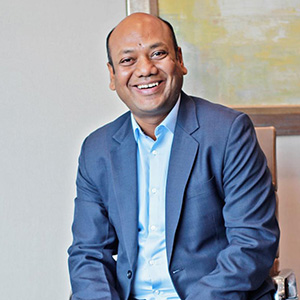 Pushkar Saran, Executive Director - Southeast Asia and South Asia, Institutional Products, TOEIC, ETS
In 2025, global workforce dynamics made one thing clear: organizations are looking beyond degrees and job titles to understand what people can actually do. The latest ETS Human Progress Report shows rising global interest in skills verification and lifelong learning as essential drivers of human progress, with employers and employees alike recognising that measurable communication and workplace skills matter just as much as technical knowledge.
For India, where the workforce is both young and globally mobile, this shift has significant implications. English proficiency has become a foundational workplace skill that influences collaboration, decision-making, and performance in diverse teams. In HR conversations across sectors, the ability to communicate clearly and work confidently with global partners is increasingly linked to talent competitiveness and career mobility.
Looking ahead into 2026, assessments will continue to play a strategic role in talent development and workforce planning. Employers are seeking reliable ways to benchmark capabilities, not just credentials, and professionals are actively building skills that are observable, verifiable and relevant to evolving roles. In this context, thinking about how we measure and signal workplace readiness, including communication skills, is central to building a workforce ready for the interconnected demands of tomorrow’s economy.

 Tadas Lavickas, Head of International Recruitment, University of Worcester
After a dip in international student numbers in 2024, the UK higher education sector has shown clear signs of recovery in 2025. Universities have responded by strengthening their employability focus and enhancing the overall student experience, ensuring international students receive stronger value from their investment. This renewed emphasis has helped restore confidence in the UK as a leading study destination, particularly for students seeking quality education combined with career readiness. 
At the University of Worcester, we are seeing a noticeable shift towards professional and specialist programmes, especially in areas such as healthcare and teaching, as students increasingly value clearly defined qualifications over more generic degrees. Employability has become a decisive factor, with many programmes now offering substantial placement components that account for a significant portion of course content. Looking ahead to 2026, as global competition intensifies with emerging education hubs across Europe, East Asia and the Middle East, this focus on practical learning and outcomes-driven education will be key to delivering greater value for international students.
 Anna Audhali, Senior Regional Manager, Nottingham Trent University
As we moved through 2025, we saw students approach higher education at Nottingham Trent University with far more clarity and purpose. Interest is now coming from a wider range of cities across India, and students are looking beyond traditional subjects such as business, science and technology to newer and fast-growing areas like psychology, luxury brand management and creative industries. Their choices show a clear shift towards degrees that offer relevance, resilience and a direct connection to future careers.
A defining priority for Indian students this year has been employability. They want academic learning supported by real practical exposure, placements and opportunities to build strong workplace skills. Employers continue to value communication, adaptability and cross-cultural awareness, and students are responding by seeking environments where they can develop these strengths.
As we look ahead to 2026, this outcomes-driven mindset will only grow stronger. Students will increasingly prioritise universities that provide meaningful industry engagement, practical learning and clear pathways into global careers. We see this as a positive trend, as it aligns higher education choices with long-term professional success.
Meenakshi Kachroo Chatta, Senior Director & Regional Head at College Board - India, South & Central Asia
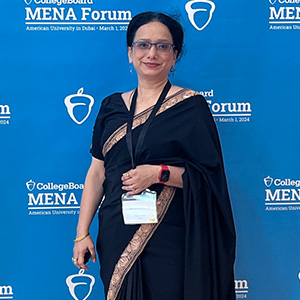 Over the past year, Indian students have approached international admissions with much greater clarity around their preferred destinations and academic pathways. The United States continues to lead in SAT score sends, while Australia has shown the fastest year-on-year growth. Among SAT test takers in the 2025 cohort, interest remains concentrated in engineering, computer and information sciences, business and management, engineering technologies, biological sciences, and mathematics. This reflects a sustained preference for academically rigorous disciplines that provide strong long-term career opportunities.
As we look toward 2026, one of the most noteworthy shifts is the broadening participation base across India. Engagement with the SAT and AP is expanding beyond traditional metros to smaller and less populous cities such as Amritsar, Gurugram, Noida, Kanpur, Vadodara, and Greater Noida, with growing participation across states including Uttarakhand, Maharashtra, Gujarat, Rajasthan, Punjab, Assam, and the Delhi–NCR region. This points to deeper awareness, stronger preparation, and more equitable access for students from a wider range of educational backgrounds.
In a globally competitive admissions environment, assessments like the SAT and AP will continue to play a central role. They offer universities a consistent and comparable academic benchmark while enabling students across regions and curricula to demonstrate readiness for college-level study in a fair and transparent manner.
Current Issue