International Education Day: Unlocking Global Opportunities
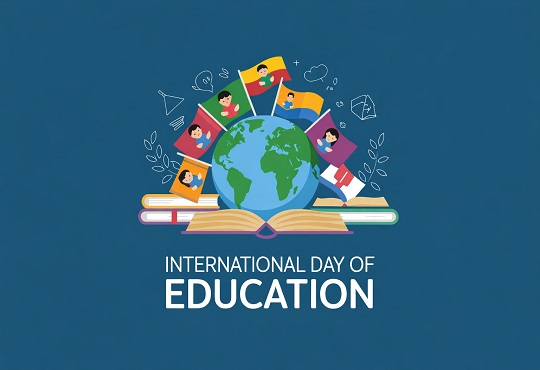 On International Education Day, we celebrate the transformative power of education across the world. It is a day to recognize the pivotal role that education plays in unlocking opportunities, fostering innovation, and bridging divides. In every corner of the globe, education empowers individuals, enriches societies, and strengthens economies. This year's theme invites us to reflect on how we can further expand access to quality learning for all, regardless of background or circumstance.
As the world continues to evolve, education remains the most powerful tool to address global challenges, from sustainability to technological advancement. By embracing diversity in learning and promoting inclusive educational systems, we ensure that future generations are equipped with the skills needed to thrive. On this special day, we reaffirm our commitment to building a more equitable, educated, and interconnected world, where knowledge becomes a bridge, not a barrier.
Dr. Amit Kumar Thakur, Professor and Head of the Department of Aerospace Engineering at Lovely Professional University, Punjab
 Education is not filling minds, but teaching them how to think forward. On this International Day of Education, we celebrate learning not as the storage of facts, but as the awakening of curiosity, creativity, and critical thought. True education empowers students to question assumptions, explore possibilities, and design solutions for challenges that do not yet exist. It transforms classrooms into spaces of imagination where mistakes are welcomed as part of growth and ideas are valued over rote answers. When learners are taught how to think forward, they become innovators, ethical leaders, and responsible global citizens. Education then becomes a bridge between today’s knowledge and tomorrow’s needs, guiding young minds to adapt in a rapidly changing world. It nurtures confidence to dream boldly and discipline to act wisely. Such an education does not merely prepare students for exams, but prepares humanity for a better, more thoughtful future.
Dr Vanita Bhoola, Assistant Dean – EMBA & Executive Education at SP Jain School of Global Management.
 Education remains one of the most powerful tools for advancing peace and sustainable development. At a time of growing inequality, conflict, and climate uncertainty, education does more than preparing individuals for careers; it builds resilient societies by nurturing critical thinking, empathy, and a sense of shared responsibility. Empowering young people through inclusive, future-ready education is essential to achieving the sustainable development goals and creating long-term social and economic stability.
Dr. B. K. Chakravarthy, Dean, School of Design Innovation, Mahindra University.
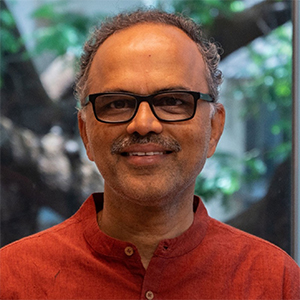 Students are the driving force of sustainable development as well as innovation, and they should be treated as active partners since they are agents of change. Courses and curriculum need to be designed and tailored according to the needs of students, and they should be considered as co-creators in the impressionable phases of their learning. With rapid technological advancement, we are witnessing a pedagogical shift in which students will play a crucial role in shaping the future of education. Since students will be the beneficiaries of the current education programmes, educators must interface them with projects with real stakes.
Higher education institutions are rethinking the modality of teaching to help students navigate learning in the age of AI, and getting the students to immerse themselves in live projects where they learn-by-doing is essential for real-world application of knowledge. Additionally, every student deserves the right to equitable and quality education. Empathy, experimentation and shared responsibility, which are some of the principles we teach our students of design and innovation, are important for nurturing future leaders and enabling them to thrive in a highly competitive industry.
Prof. G. Hari Shankar Prasad, Campus Director of National Institute of Fashion Technology, NIFT
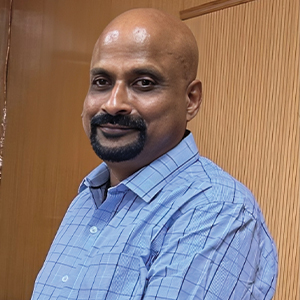 Education has gone many paradigm shifts since the inception of human civilization and technology has been a great enabler of education process, starting from the oral rendition of shlokas and mantras and passing on from generation to generation. Developing script through writings on rocks and subsequently on Thalapatra Granthas, toddy leave books have made passing on the knowledge and skills easy.
Invention of paper and ink are major milestones in the learning and education process. It enabled creation of more permanent records of knowledge and skills. Digital space has created a revolution in storing, retrieving and sharing of knowledge and skills and tremendously impacted education and learning process. The education process has diversified with offline, online and hybrid modes of conducting classes and self-paced courses, MOOCs have re-defined the education and the role of teacher. The teacher and the education system evolved as the technology evolved and will keep evolving. The teacher needs to adapt to the evolving technology enabling the education.
Harshit Desai, Director, MIT ID Innovation
 Education today must go far beyond the transfer of information or the pursuit of degrees. In a world shaped by rapid technological change, uncertainty, and complex societal challenges, education has to equip learners with the ability to think independently, question assumptions, and create meaningful solutions. True education lies in nurturing curiosity, empathy, and the confidence to experiment, fail, and learn. It must encourage learners to connect knowledge with action, ideas with impact, and creativity with responsibility. On this International Day of Education, it is important to recognize that education plays a critical role in shaping not just careers, but mindsets - preparing individuals to innovate, adapt, and contribute positively to society. When education empowers learners to solve real-world problems and build something of value, it becomes a powerful force for change, enabling individuals to shape the future rather than simply respond to it.
Tara Kapur, India Market Lead, Duolingo English Test
 The progress and development of the next generation are forcing every sector, including education, to rethink how it operates. Young people today gravitate toward models that are flexible, convenient and built around their real-life needs rather than legacy structures. In the Education sector, students are no longer just participating in learning systems; they are challenging the assumptions on which many of our systems were built. They are actively co-creating how education must evolve, from how knowledge is delivered to how skills are evaluated and recognized.
Prof (Dr) Bhawana Chanana, Director, Amity School of Fashion Technology, Amity University Mumbai
 Education is not merely the transfer of knowledge; Quality education empowers individuals to transform challenges into opportunities and knowledge into meaningful action. On the International Day of Education, we are reminded that classrooms shape not just careers, but teach learners to question, empathize, and to imagine a more just world. True education empowers individuals to think critically and innovate with purpose. When education is inclusive, ethical, and future-ready, it builds resilient communities and responsible global citizens.
Inclusive education becomes the strongest force for sustainable development and social change. Let us commit to learning systems that value humanity as much as achievement, wisdom as much as skill, and responsibility as much as success - because the future we hope for is built by the education we choose to provide today.
Professor Parimal Mandke, Vice President, NIIT University
 Education must constantly adapt to remain relevant in an ever-changing world is a reminder of the significance of the International Day of Education. With the advent of AI and automation, the very ideas of knowledge, work, and capability are being redefined. This calls for a shift away from delivering fixed information towards building flexible, future-proof, industry-linked skills that evolve with real-world needs.
Technological literacy and hands-on experience with AI tools are necessary, but not sufficient. The ability to think critically, apply judgment, solve complex problems, and make meaningful use of information will ultimately distinguish graduates in an AI-driven economy - capabilities that remain distinctly human. Education systems, therefore, must strike a careful balance between strong foundations in emerging technologies and the development of creativity, ethical reasoning, collaboration, and resilience. Universities must remain industry-linked, embedding practical problem-solving, real-world exposure, and a lifelong learning mindset into academic programmes.
Ts. Abdul Halim bin Abdul Rahman, Lecturer of Department of Computing & Information Technology, Tunku Abdul Rahman University of Management and Technology (TAR UMT)
 In a world shaped by rapid change and global connectivity, education must go beyond the classroom to inspire purpose, leadership, and impact. We approach to quality education realized through Beyond Education, a philosophy that extends learning beyond the classroom to develop students into confident global thinkers and leaders. Through initiatives such as Youth Hub Centre, we actively empower youth and the wider community by providing meaningful opportunities to learn, upskill, and grow. We prepare learners not only for careers, but for life by bridging academic excellence with real-world relevance, innovation, and community engagement. This commitment reflects our support for Sustainable Development Goal 4 (Quality Education), ensuring education remains inclusive, equitable, and transformative.
Dr Christopher Abraham, CEO & Head, Dubai Campus, SP Jain School of Global Management, SP Jain School of Global Management
 As AI and automation continue to reshape industries and decision-making, education must evolve beyond technical skill-building to strengthen human agency. While technology can transform how knowledge is delivered, creativity, ethical judgment, and adaptability remain uniquely human strengths. The future of education lies in enabling young people to work confidently alongside intelligent systems using technology as a tool for progress while retaining the ability to lead, innovates, and makes values-driven decisions.
Current Issue
.jpg)