Budget 2026 Watch: Higher Education Expectations
 As India approaches Budget 2026, expectations within the higher education ecosystem are rising. Universities, institutions, and learners alike are looking for policy signals that strengthen quality, accessibility, and global competitiveness.
With rapid shifts in digital learning, research innovation, faculty development, and industry integration, Budget 2026 has the potential to redefine how India prepares its future workforce.
Strategic investments and reforms could accelerate internationalisation, improve infrastructure, and ensure higher education remains a powerful driver of economic and social progress.
Nikhil Barshikar, Founder & CEO of Imarticus Learning and Chairman of the Advisory Council at Imarticus School of Finance & Business
 NEP 2020 is a well-designed and forward-looking policy that provides India with a clear, coherent framework across schools and higher education. It gets the fundamentals right, from foundational learning and teacher development to multidisciplinary universities, credit mobility, and global integration. The real opportunity in the next Union Budget is to translate this strong policy intent into execution at scale.
In schools, the challenge is capacity and delivery. India still faces an estimated 1 million-plus teacher vacancy, even as the system serves over 250 million students. Bridging this gap will require sustained funding for teacher recruitment, continuous professional training, and digital teaching infrastructure, particularly in early grades where learning outcomes have the highest long-term impact.
In higher education, the distance from NEP’s ambitions is visible in the numbers. Gross Enrolment remains around 28%, well below the 50% target, research spending continues to stay under 1% of GDP, and the number of truly multidisciplinary, globally benchmarked universities remains limited. The next Budget should therefore accelerate implementation, by enabling foreign universities to operate meaningfully in India, strengthening credit transfer and mobility, and supporting the emergence of new-age universities focused on research, technology, and employability. Policy clarity exists; outcomes will now depend on execution, funding, and institutional capacity.
Arjun Nair, Co-founder, Great Learning
 Under India’s GST framework, core educational services offered by institutions are exempt, but many online courses, coaching programmes and digital learning offerings continue to attract the standard 18 per cent GST. In practical terms, this adds to the cost for both learners and providers and can slow adoption, especially in price-sensitive, skills-focused learning that sits outside formal curricula.
While recent GST rationalisation, such as making certain education inputs like stationery and learning materials tax-free, has helped ease some pressure, the reality on the ground is different for our youth. Stepping away from work to pursue long-term, formal education is simply not an option for most. For them, short-term online courses are not a matter of choice; they are the only viable way to build new skills and stay relevant in a fast-changing job market. That’s why the continued 18 per cent GST on standalone digital learning services deserves a more balanced, calibrated view, one that keeps access and affordability at the centre.
Alongside tax policy, easier access to affordable learner financing, including lower-interest education loans for upskilling, can make a real difference. When learning is both accessible and affordable, digital education can scale in a way that is sustainable, inclusive, and truly impactful.
Aritra Ghosal, Founder and CEO, OneStep Global
 As India moves toward its goal of becoming a global higher education hub, Budget 2026 must prioritize the systems that turn student interest into lasting outcomes. Attracting international students is only the first step; what truly matters is whether institutions can deliver recognized qualifications, research exposure and credible career pathways at scale. International credentials do not create value on their own unless they are supported by strong industry linkages, employer recognition and on-ground student success frameworks. The NITI Aayog roadmap rightly emphasises quality and governance. What India now needs are robust recruitment, conversion and academic delivery mechanisms that give students confidence that studying in India leads to meaningful academic and professional returns.
Tripti Maheshwari, Co-Founder & Director, Student Circus
 As India moves toward its ambition of hosting over one million international students by 2047, Budget 2026 becomes a decisive moment to shift from policy intent to on-ground delivery. The NITI Aayog roadmap makes it clear that growth without quality will not build a sustainable global reputation, and this must be reflected in how funding and incentives are designed. Investment should focus on globally benchmarked curricula, strong research ecosystems and transparent quality assurance across institutions.
With foreign universities expected to expand their presence in India, success will ultimately be judged by student outcomes rather than the number of campuses created. International students increasingly choose destinations based on employability, industry linkages and post-study career prospects. Budgetary support that encourages industry-integrated learning, international faculty collaboration and outcome-linked funding can significantly strengthen India’s credibility as a competitive, value-driven study destination.”
Omar Chihane, Global General Manager, TOEFL, ETS
 As India looks ahead to the Union Budget 2026–27, the focus must shift from intent to execution in building a globally competitive education and skills ecosystem. Over the past few years, the foundations for internationalization and workforce readiness have been laid; the next step is ensuring scale, quality, and outcomes.
Priority should be given to embedding globally benchmarked language proficiency and skills assessments across secondary and higher education, so students are internationally prepared well before graduation. Equally important is investing in transparent, credible assessment and testing infrastructure that supports mobility, employability, and trust in Indian talent worldwide.
The Budget also presents an opportunity to strengthen India’s position as both a source and destination for global talent. Targeted funding for merit-based scholarships, joint research pathways, and international faculty and student exchange programmes can help retain knowledge, drive innovation, and deepen global collaboration. With sustained public-private partnerships and outcome-linked investments, Budget 2026 can play a defining role in positioning India not just as a talent supplier, but as a global education and assessment hub.”
Dr. Anita Patankar, Executive Director, Symbiosis Dubai
 “As India approaches the Union Budget, there is a strong expectation that higher education will receive focused support aligned with global competitiveness. Increased investment in interdisciplinary learning, digital infrastructure, and faculty development will be critical to preparing students for rapidly evolving job markets. Support for international collaborations and mobility will further strengthen India’s academic influence worldwide. The Budget should also emphasise affordability, stronger industry–academia linkages, research-driven education and skill-based education so that Institutions can contribute meaningfully to employability, innovation, and the long-term growth of India’s knowledge economy.”
Dr. Sanjay Gupta, Vice Chancellor, World University of Design
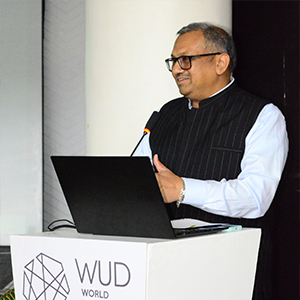 “As India prepares for Budget 2026, my expectation would be for the higher education sector to be seen not merely as a social sector but as a strategic economic investment. The next phase of India’s growth will be driven by innovation, advanced manufacturing, creative industries and digital transformation. All of these depend on strong design and interdisciplinary education. We hope to see dedicated funding for design-led R&D, creative-technology labs, and industry-linked universities that translate knowledge into products, services, and cultural exports. Supporting institutions that integrate design, technology, sustainability, and entrepreneurship will help India move from being a cost-competitive economy to a globally competitive innovation economy.”
Pushkar Saran, Executive Director – Southeast Asia and South Asia, Institutional Products, TOEIC, ETS
 India’s skilling challenge today is not about scale, but about workplace readiness and credibility. As labour market signals clearly show, the fastest-growing roles across AI, technology, healthcare, GCCs and global services increasingly require professionals who can communicate clearly, collaborate across borders and function in hybrid, AI-enabled workplaces. Yet a large proportion of job-seekers continue to feel unprepared for these real-world demands, despite having formal qualifications.
With India sitting at a unique demographic and geographic advantage, supplying talent both within the country and to global labor markets, workplace communication, particularly in English, has become a decisive employability factor. Budget 2026 presents a critical opportunity to strengthen India’s skilling architecture by moving beyond training volumes to standardised, job-relevant validation of workplace skills, aligned with employer expectations globally. Without addressing this skills-validation gap, India risks under-leveraging its talent potential at a time when global demand for Indian professionals is rising.
Vinit Shah - Head Finance and Infrastructure at MICA
 The upcoming Union Budget is expected to focus on manufacturing-led growth, strengthening the Make in India framework, and boosting investment through tariff rationalization and support for key sectors such as electronics, renewable energy, semiconductors, and defence.
The budget will have continued emphasis on infrastructure development, including roads, railways, urban mobility, and power transmission, to enhance economic efficiency and long‑term competitiveness.
On the taxation front, major structural changes are unlikely, but modest relief may be introduced through adjustments in standard deduction, GST simplification, and clearer compliance rules under the new Income Tax Act. Sectors like healthcare, diagnostics, and digital payments expect policy incentives to improve accessibility, affordability, and innovation.
Overall, the Budget is likely to balance fiscal prudence with growth, supporting domestic manufacturing, technology adoption, and economic resilience.
Jeel Gandhi, CEO, Under25
 "With over 65% of India’s population under 35, the upcoming Union Budget is a pivotal moment for the country’s youth. It presents a critical opportunity to allocate dedicated funds and provide incentives that support early-stage funding, seed capital access, and enable start-ups for young entrepreneurs. We expect a long-term vision of positioning India as a global hub for young talent, where these dedicated allocations will help reduce entry barriers and give a boost to youth-led innovation.
Being one of the youngest nations in the world, there is immense potential. But this potential needs preparation. Most fresh graduates in India face the same challenge – a degree in hand but limited skills in the real world. Supporting structured, paid internships and industry-academia collaboration can significantly ease young Indian's transition from education to employment. This is essential to leverage India’s demographic dividend for economic growth.
Another area that needs consideration is affordable internet and digital infrastructure, particularly in Tier 2 and Tier 3 cities. This will ensure equal access to opportunities, especially in the creator economy. Lastly, we also expect a stronger focus on Gen-Z-ready skills across digital, creative, communication, AI, and other new-age tech to build employability that sustains in the long run."
Niyati Handa, Co-founders & Director of Eklavya
 “Looking ahead at Budget 2026, there is a bigger expectation that India’s education agenda will be recalibrated. The focus should move beyond enrollment numbers to learning outcomes, strengthening critical thinking, conceptual understanding, and teaching excellence that shape young minds.
A substantive increase in the budget for school education is essential, especially at the foundational level. Investments to upgrade teacher training, curriculum modernisation, and age-appropriate learning frameworks have to take place holistically to develop solid academic and cognitive roots for future-ready learners. Likewise, I believe that bridging the urban–rural education gap should remain one of the top priorities. When monetary assistance is enabled in scaling digital and hybrid learning models, it can significantly expand access to quality education in Tier 2, Tier 3, and rural regions, ensuring that geography does not limit potential.
Teacher capacity building also deserves sharper focus. Continuous upskilling of educators with evolving student requirements, new pedagogies, and even interdisciplinary approaches will be key to sustaining educational reform. Additionally, certain policies can also be employed that reinforce merit-based pathways for students through scholarships and need-based financial support. This, in turn, will ensure that deserving students are empowered to pursue their aspirations without financial constraints.
A strong case also exists for closely aligning education with career outcomes, emerging professions and real-world problem-solving. We expect budgetary support for learning to become more relevant and make a difference.
Ultimately, Budget 2026 must envision education as a long-term strategic investment: one that powers India’s knowledge economy, drives innovation, advances the research ecosystem, and solidifies the nation’s global competitiveness over the years to come.”
Prof. M. A. Venkataramanan, Pro-Vice Chancellor, FLAME University
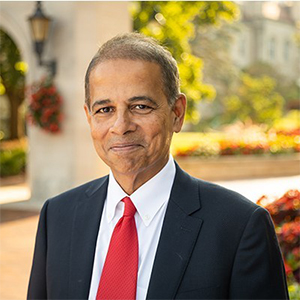 “Ahead of the Union Budget 2026, the education sector expects support for building future-ready universities. We need to invest more in India-centric research and development, interdisciplinary learning, and integration of AI in everyday teaching to enhance critical thinking, deeper inquiry, and real-world problem-solving. The Budget must also strengthen pedagogical innovations and experiential learning helping students to apply knowledge in industry, policy, and society. Greater industry–academia collaborations, through structured career pathways, will be key to improving job-readiness of our students. At a time when several Indian students are reconsidering overseas education, we must use this opportunity to build globally benchmarked institutions at home: ones that nurture ethical, adaptable, and global leaders of tomorrow.”
Pratham Barot, CEO & Co-Founder of Zell Education
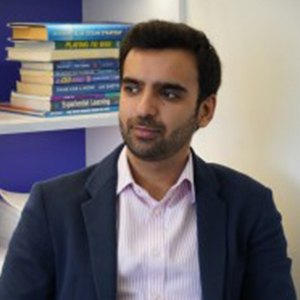 ” We are pleased with the government's emphasis on providing opportunities for skill development and employability in the budget. The Prime Minister's package of 5 schemes and initiatives to facilitate employment, skilling and other opportunities for 4.1 crore youth over 5 years with a central outlay of ₹2 lakh crores is really inspiring . The Govt has made a provision of ₹1.48 lakh crores for education, employment and skilling taking one more step towards development and success. The emphasis on vocational training and apprenticeships is particularly noteworthy, as it will enable practical, hands-on experience that aligns with industry demands. Furthermore, the allocation of resources for digital skill training will ensure that our workforce remains competitive in an increasingly digital global economy. Overall, this budget reflects a forward-thinking approach to building a resilient and skilled workforce, which is essential for the sustained growth and prosperity of our country. We are optimistic that these measures will yield significant benefits and look forward to their successful implementation.
Nirvaan Birla, Managing Director of Birla Open Minds Education
 The upcoming budget is a golden opportunity to fuel India’s journey toward becoming a global talent powerhouse. By deepening the focus on teacher empowerment, we can turn the vision of the National Education Policy into a reality. The future belongs to a nation that invests in its learners today, ensuring every student has the tools to thrive in a digital-first world. As we head into #Budget2026, there’s a lot to feel positive about. The intent around digital learning, AI readiness, skills-embedded education and innovation is clear there, and with over 2 lakh recognised startups, the capacity to execute also exists.
Budget 2026, he notes, presents an opportunity to strengthen implementation, empower educators and build a future-ready talent ecosystem.
Ganesh Kohli, Founder of IC3 Movement
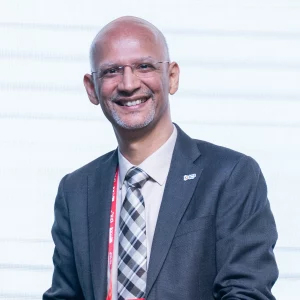 India’s ambition to emerge as a global education destination will be shaped not only by physical expansion or international collaborations, but by how effectively students and families are supported to navigate choice within an increasingly complex education ecosystem. Across Indian and international boards, there is a clear shift toward skills-based learning, flexible pathways, and competency-driven assessment, reflecting a national move beyond exam-centric outcomes.
This direction is further reinforced by NITI Aayog’s emphasis on academic quality, deeper global collaboration, research integration, and institutional readiness. As transnational education models evolve and student pathways become more interconnected, the ability to interpret choice and make informed decisions becomes central to student success.
To translate these reforms into meaningful outcomes, career and academic guidance must be recognised as core educational infrastructure rather than an optional service. Budget 2026 presents a timely opportunity to strengthen counselling capacity at the school level, ensuring students are equipped to understand flexibility early, align learning with aspiration, and progress with confidence.
A globally credible education system ultimately rests on students who understand their pathways and move through them with clarity, confidence, and purpose.
Current Issue
.jpg)