
Unlocking ADHD Talent While Protecting Well-Being and Balance
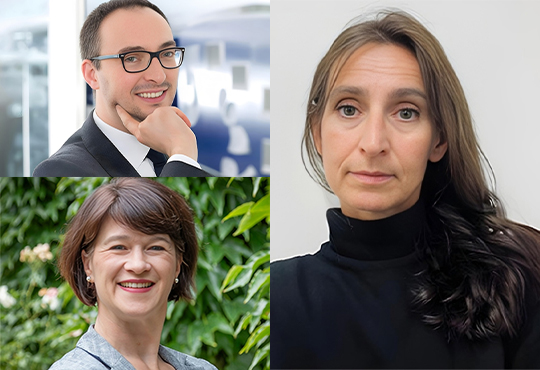 Dr. Kerstin Alfes, Professor of Organization and Human Resource Management, ESCP Business School; Dr. Daniela Lup, Professor of Organization and Human Resource Management, ESCP Business School; and Thomas Blondel, Doctoral Researcher in Organization and Human Resource Management, ESCP Business School
In today’s workplace, thriving has become the new gold standard for well-being and performance. Companies like Microsoft no longer limit themselves to measuring employee satisfaction or engagement.
Instead, they look at thriving - employees’ ability to feel energized, to keep learning, and to grow in their roles. Research shows that thriving fuels creativity, retention, and sustainable performance.
But is thriving experienced the same way by everyone?
Our study reveals a very different reality for individuals with Attention Deficit Hyperactivity Disorder (ADHD). For this group, thriving can also be a warning sign.
To understand why, we must first deconstruct certain stereotypes. People with ADHD are often seen as disorganized, unreliable, or unmotivated. They are associated with inattention or lack of interest in learning.
From this perspective, their thriving may seem unlikely. And yet, our findings show the opposite. When the right conditions are in place—meaningful work, a respectful and stimulating environment, and varied tasks - employees with ADHD can be highly engaged, focused, and creative.
Their ability to solve complex problems, their thirst for learning, and their energy sometimes make them even more effective than their peers.
But their thriving is not without risks. ADHD is associated with weak self-regulation, making it difficult to manage efforts and limits. Once invested in their work, these employees often don’t know how to “slow down.”
What begins as hyperfocus or a burst of learning can quickly tip into overwork. They ignore fatigue, neglect personal needs, and continue chasing performance and recognition, until they burn out.
As long as they succeed, their intensity is perceived positively. But when they collapse or leave the company abruptly, the human and organizational costs are heavy. By then, it is too late to intervene.
This ADHD-specific model of thriving is neither captured by standard measurement tools nor accounted for in many HR policies. And yet, it concerns far more people than one might think: ADHD affects around 4-5% of working-age adults, a figure likely underestimated given undiagnosed cases.
These profiles bring exceptional value, but are often misunderstood. Worse still, well-intentioned policies designed to promote thriving may, for them, accelerate over investment and eventual breakdown.
The solution is not to stifle their potential, but to redefine what it means to thrive sustainably. For ADHD talent, thriving must include restorative breaks, flexible structures, clear feedback, and genuine psychological safety. Novelty, meaning, and variety remain essential but must be balanced by concrete support systems.
Career development paths also need to be rethought. Many ADHD employees wait for others to validate their potential. They sometimes avoid promotions - not from lack of ambition, but from fear of failure or judgment.
Active support, regular check-ins, and proactive recognition can break this cycle of self-exclusion. The stakes go beyond individual well-being. Companies that ignore these dynamics risk losing some of their brightest talent.
By contrast, those that embrace truly neuro-inclusive leadership unlock levels of productivity that conventional models simply cannot reach.
About the authors:
Dr. Kerstin Alfes, Professor of Organization and Human Resource Management, ESCP Business School
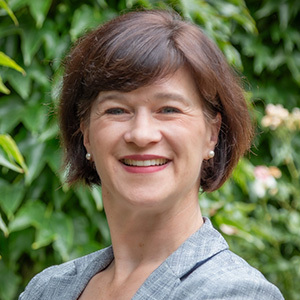
Kerstin’s research interests include strategic human resource management, neurodiversity, employee engagement, and new ways of working. She has published extensively in leading peer-reviewed journals, including Human Resource Management, Human Relations, Human Resource Management Journal, Journal of Vocational Behavior, and International Journal of Management Reviews.
Her current research projects focus on the work experiences of employees with ADHD, freelancing, and human resource management practices in emergency service organisations (police, firefighters, paramedics).
Before joining ESCP Business School, Kerstin was a Senior Lecturer at Kingston University London and an Assistant Professor at Tilburg University (The Netherlands). Kerstin completed her Habilitation (2014) and her Dr. rer. oec. (PhD equivalent, 2008) at the University of Bern (Switzerland) and received her Master’s Degree (Diplom-Kauffrau) from the University of Mannheim (Germany) in 2004.
Dr Daniela Lup, Professor of Organization and Human Resource Management, ESCP Business School
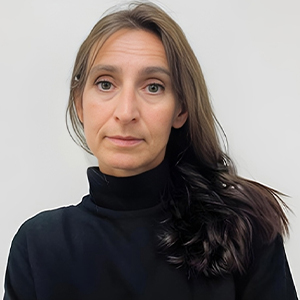
Daniel Lup is passionate about engaging in research that resonates with practitioners’ dilemmas related to the future of work, especially regarding hiring, diversity and inclusion, teams and team creativity, prosocial behavior, and ethics.
Her work has been published in internationally renowned journals such as Organization Science, Human Resource Management, Strategic Organization, Industrial and Labor Relations Review, Work, Employment and Society, British Journal of Industrial Relations, and Journal of Business Ethics.
She has also been featured in management outlets such as Harvard Business Review and LSE Business Review.
Daniela holds a PhD and a MBA degrees, both from the University of Chicago, Booth School of Business.
Thomas Blondel, Doctoral Researcher in Organization and Human Resource Management, ESCP Business School
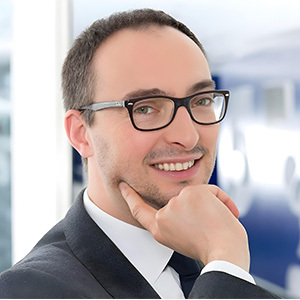 Thomas Blondel is a PhD Candidate in Organization and Human Resource Management at ESCP Business School, Berlin, where his research explores neurodiversity at work.
Alongside academia, he is Co-Lead of Global Category & Revenue Growth Management at NIVEA Skin Care (Beiersdorf), building on over 18 years of international leadership in marketing and business management.
He also lectures at several European universities, bridging corporate practice and research to promote inclusive and sustainable organizational performance.
He holds a Master in Management from Audencia Business School in France.
Current Issue
.jpg)