AIIMS Delhi, IIT-B Tie Up to Modernise Medical Training
- AIIMS Delhi-IIT Bhubaneswar MoU for medical training
- AASHA-HOPE uses AI for mental health in doctors
- Everyday Hero gamifies frontline worker skills
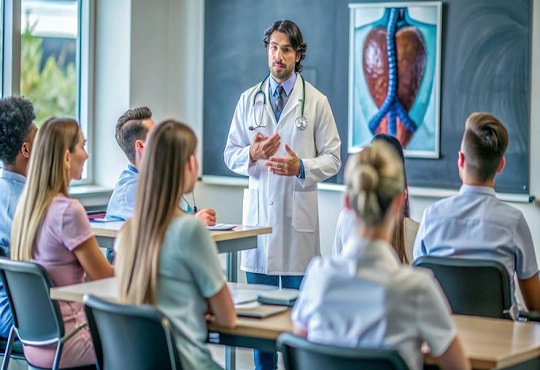
AIIMS Delhi has joined hands with IIT Bhubaneswar Research and Entrepreneurship Park through a recently signed Memorandum of Understanding (MoU) to reimagine medical education and to extend mental health support to healthcare workers in the whole country. Two novel projects have come out of this collaboration aiming at postgraduate doctors and frontline workers, respectively, integrating clinical proficiency with technologically advanced learning to develop practical skills, workforce readiness, and professional well, being.
The lead projects are AASHA, HOPE (Manasa Santulan), which uses AI, based innovations to improve the quality of mental health training for postgraduate doctors, thereby ensuring better clinical practices, self, care, and stress management strategies to prevent burnout in the highly demanding medical environments.
On the other hand, the Everyday Hero program uses gamification methods, e.g., real, life healthcare challenges, progress tracking through points, and role, play based scenarios, to train frontline healthcare workers, thus making learning both engrossing and effective in terms of skills retention and measurable performance in the delivery of healthcare services.
Also Read: UPESMET 2026 Registration Begins for MBA Admissions
Backed by domain experts from IIT Bhubaneswar REP and Think space Edutech, a startup incubated at the park, the programs are scalable by design, with a target to reach over 75, 000 postgraduate doctors across India and also to cover all AIIMS campuses.
"The partnership is just a push towards innovation in medical education, combining mental, health support, digital learning design, and scalable training models to strengthen India’s healthcare workforce, " said one of the IIT Bhubaneswar REP officials.
By leveraging AI and gamification, this visionary partnership not only bridges the existing gaps in conventional medical education but also its primary objective is to lower the physician burnout rate, help learners retain key skills more effectively, and ultimately improve the standards of healthcare delivery nationwide.
Current Issue
.jpg)